Roofers in Fort Lauderdale, Florida
Delivering Superior Roofing Solutions for Over 25 Years
-
Free Same-Day
Inspections -
Lifetime Workmanship
Warranty -
Insurance Claim
Support
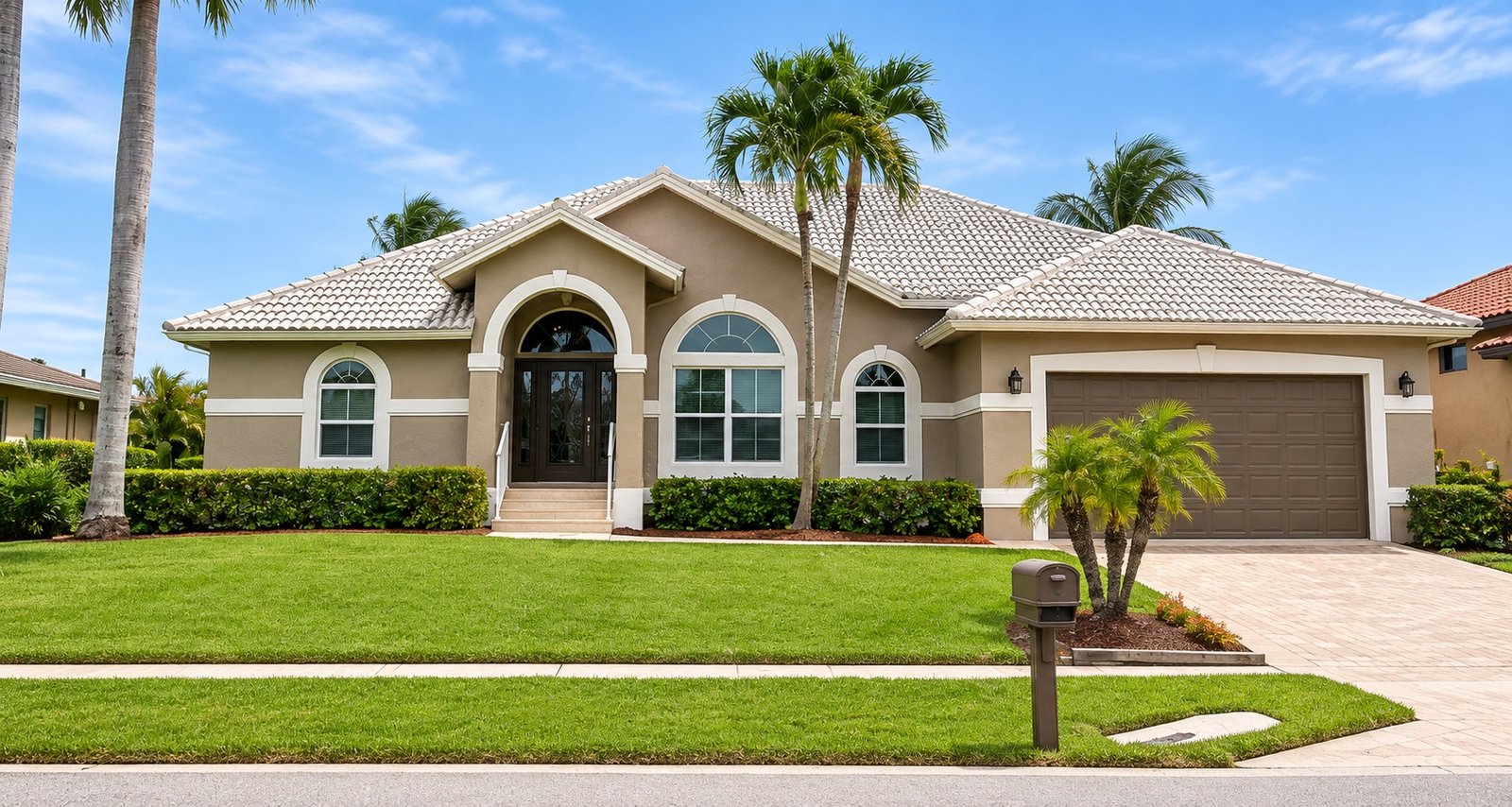
Fort Lauderdale runs its own building department, so a re-roof here goes through LauderBuild instead of the county — and that one detail decides how quickly your job actually starts. We pull the permit, upload the product approvals, and meet the inspector ourselves. Most people call us after a stain shows up on a ceiling below a flat section, or after a storm strips enough tile that the underlayment is doing all the work.
Call (954) 773-9965Get Your Free Quote
Roof Replacement, Installation & Repair in Fort Lauderdale
-
Roof Replacement
Most Fort Lauderdale replacements we do are tile roofs where the tile is still sound but the underlayment underneath has cooked through, or 1990s shingle roofs that insurers will no longer cover. We tear off to the deck, replace rotten sheathing, re-nail to current HVHZ schedule, and install a system rated for this wind zone. You get the permit, the inspections and the warranty paperwork in one packet.
Get a replacement quote -
New Roof Installation
New construction, an addition, or a Florida room that was never roofed properly. We work from the plans, size the system to the structure, and coordinate with your GC so the dry-in happens before the rest of the trades are stuck waiting. Every product carries the Notice of Acceptance your Fort Lauderdale inspector will ask for at final.
Plan a new roof -
Roof Repair
A repair is the right answer far more often than roofers admit. Slipped tile, a failed pipe boot, torn seam on a low-slope section, flashing pulling away from a chimney or parapet. We find the actual entry point rather than sealing the stain, and we will tell you plainly when a roof is too far gone for another patch to be worth your money.
Call about a repair
Why Fort Lauderdale Homeowners Choose Advance Quality Roofing
Anyone can hand you a number. Here is what you are actually buying when the crew shows up in Fort Lauderdale.
-
We Know South Florida Weather
Fort Lauderdale sits inside the High-Velocity Hurricane Zone, the strictest wind code in the country. Every product we install carries a Miami-Dade Notice of Acceptance or a Florida Product Approval valid for the HVHZ, tested under TAS 100, 105, 110 and 125. East of Federal Highway there is a second problem nobody warns you about: salt air off the Intracoastal corrodes fasteners, drip edge and flashing years before the roof covering itself wears out.
-
Full-Service Roofing Services
Our expertise spans every aspect of roofing, so you can trust us for:
- Roof Repairs: Addressing storm damage, leaks, and aging materials.
- Roof Replacements: High-quality materials installed with precision.
- Roof Maintenance: Keeping your roof in excellent condition year-round.
- Roof Inspections: Thorough assessments to identify problems early.
-
Top-Tier Materials for Maximum Durability
We use only the best materials from trusted manufacturers. Whether it’s concrete or clay tile, standing seam metal, or architectural shingles, we’ll recommend options that enhance both durability and curb appeal — and that carry the Miami-Dade Notice of Acceptance your roof needs to pass inspection.
-
Certified, Experienced Roofers
Our fully licensed and insured team brings decades of combined experience to every project. We follow strict safety protocols and industry standards, ensuring your roof is built to perform and last.
-
Local Crews, Local Permits
Our crews work Broward every week, so we know which Fort Lauderdale inspectors want what, and we know a Notice of Commencement has to be recorded with the county once a job passes $5,000 — skip it and your final inspection stalls. We also know the housing stock. Victoria Park and Coral Ridge are full of mid-century homes with low-slope additions that were never detailed properly. Rio Vista and the Las Olas Isles are mostly tile, where the underlayment ages out long before the tile does.
-
Insurance Claim Support
Storm damage claims get denied on technicalities more often than homeowners realize. We document the damage properly, meet your adjuster on site, and speak their language so your claim reflects what the roof actually needs. No pressure, no inflated scope.
Challenges Fort Lauderdale Homeowners Face With Their Roofs
-
Flat Sections Fail First
The Florida room, the carport, the addition off the back — low-slope sections are where Fort Lauderdale roofs leak, and they fail on a completely different schedule than the sloped tile or shingle beside them. Water does not run off a 1:12 pitch, it sits there. A modified bitumen or single-ply system with properly detailed edge metal is the fix; patching the same seam every August is not.
-
Salt Air East of Federal
On the barrier island, along the Intracoastal, and through Harbor Beach, salt spray reaches the roof every day. It attacks the metal first: fasteners, valley flashing, drip edge, vents. We have pulled ten-year-old roofs off homes in Idlewyld where the covering looked fine and every screw head was gone. Stainless or coated fasteners cost more up front and are not optional this close to the water.
-
Uplift During Hurricane Season
From June through November, the wind finds the edges first. Perimeter and corner zones take the highest uplift pressure on any roof, which is why the HVHZ code demands tighter fastener spacing there. After a storm, look for lifted tile, exposed fasteners along the ridge, and staining at the ceiling line. We document that damage properly and meet your adjuster on site so the claim reflects the whole roof.
Our Roofing Process in Fort Lauderdale
1 Free Consultation and Inspection
We come out, walk the roof, photograph what we find, and give you a written assessment of its actual condition. No charge, no obligation, and no pressure to sign anything on the spot.
2 Custom-Tailored Solutions
Tile, metal, shingle, or low-slope. Repair or full replacement. We lay out the options that genuinely fit your roof, your HOA requirements, and your budget — and we tell you when a repair will do instead of pushing a replacement you do not need yet.
3 Upfront Pricing
You get a written quote with the scope, materials, and timeline spelled out line by line. No hidden fees, no surprise change orders halfway through the job.
4 Expert Repairs or Installations
Our own licensed crews do the work. We pull the permits, schedule the inspections, protect your landscaping and pool cage, and secure the site every night before we leave.
5 Cleanup and Final Inspection
We magnet-sweep the property for nails, haul away every scrap of debris, and walk the finished roof with you before handing over your warranty paperwork and permit close-out.
Talk to a Fort Lauderdale Roofer Today
A roof in Fort Lauderdale takes salt air, afternoon downpours and hurricane-season uplift, often all in the same week. Advance Quality Roofing handles the inspection, the LauderBuild permit, the installation and the close-out, and we are still here when the warranty matters. Call for a free inspection and we will tell you honestly whether you need a repair or a replacement.
Fort Lauderdale Roofing FAQs
Straight answers from licensed contractors who work in Fort Lauderdale every week.
How long does a roof permit take in Fort Lauderdale?
The city reviews its own permits through LauderBuild, its online portal, rather than sending them to Broward County. A straightforward re-roof usually clears in one to three weeks. Historic districts, structural repairs and anything east of the Intracoastal can take longer. We file it and track it.
Do I need a Notice of Commencement?
Yes, on any job of $5,000 or more. It gets recorded with Broward County Records at 115 S Andrews Avenue and posted at the property before work starts. We prepare it and walk you through signing, because an unrecorded NOC is one of the most common reasons a final inspection gets rejected.
Why do materials have to be HVHZ-rated here?
Broward is one of only two counties in Florida governed by High-Velocity Hurricane Zone provisions; Palm Beach is not. A shingle or tile that passes inspection in Boca Raton can be rejected in Fort Lauderdale. Anything we install carries the approvals your inspector will ask to see.
The flat part over my Florida room leaks. Does the whole roof need replacing?
Usually not. Low-slope sections are a separate system with their own lifespan, and they can often be replaced on their own while the tile or shingle field stays. We will tell you honestly which situation you are in after we walk it.
Is the inspection really free?
Yes. We walk the roof, photograph what we find, and give you a written assessment with no charge and no obligation. You keep the report whether or not you hire us.
Can you work with my insurance company?
Yes. We document the damage, meet your adjuster on site, and make sure the scope covers what the roof actually needs. Storm claims get underpaid when nobody from the roofing side is there to point out what the first report missed.
How long does a replacement take?
Three to seven working days of actual work on most single-family homes, with tile running longer than shingle. Permit review and inspection scheduling add one to three weeks around that.
Can My Safe Florida Home help pay for it?
The state program offers matching grants for wind-mitigation work, including roof upgrades, on eligible homesteaded properties. Funding opens in rounds and runs out fast. We can tell you whether your home qualifies and what paperwork you need.
Roofing Services Near Fort Lauderdale
Residential Services Across Miami-Dade, Broward & Palm Beach
- Aventura
- Coral Gables
- Cutler Bay
- Doral
- Hialeah
- Homestead
- Kendall
- Miami
- Miami Beach
- Miami Gardens
- Pinecrest
- Coconut Creek
- Coral Springs
- Davie
- Deerfield Beach
- Hollywood
- Margate
- Miramar
- Parkland
- Pembroke Pines
- Plantation
- Pompano Beach
- Sunrise
- Tamarac
- Weston
- Boca Raton
- Boynton Beach
- Delray Beach
- Greenacres
- Jupiter
- Lake Worth Beach
- Lantana
- Palm Beach Gardens
- Riviera Beach
- Royal Palm Beach
- Wellington
- West Palm Beach